
Business Avenue · Access control
Meeting-room access that runs on the booking.
PearlFibers builds a door-access device and deployed it on every Business Avenue meeting room. It reads a member's card or a guest's reservation code, drives the lock, and grants access straight from the booking calendar — and keeps working through power and network cuts.
The requirement
Business Avenue bills its meeting rooms by reservation, across branches in several provinces. Each door has to grant access to whoever booked the hour, stay shut the rest of the time, and log every entry.
It also has to be reliable in Iraq: the door keeps working when the network is down, and through the power cuts that come with it.
What we built
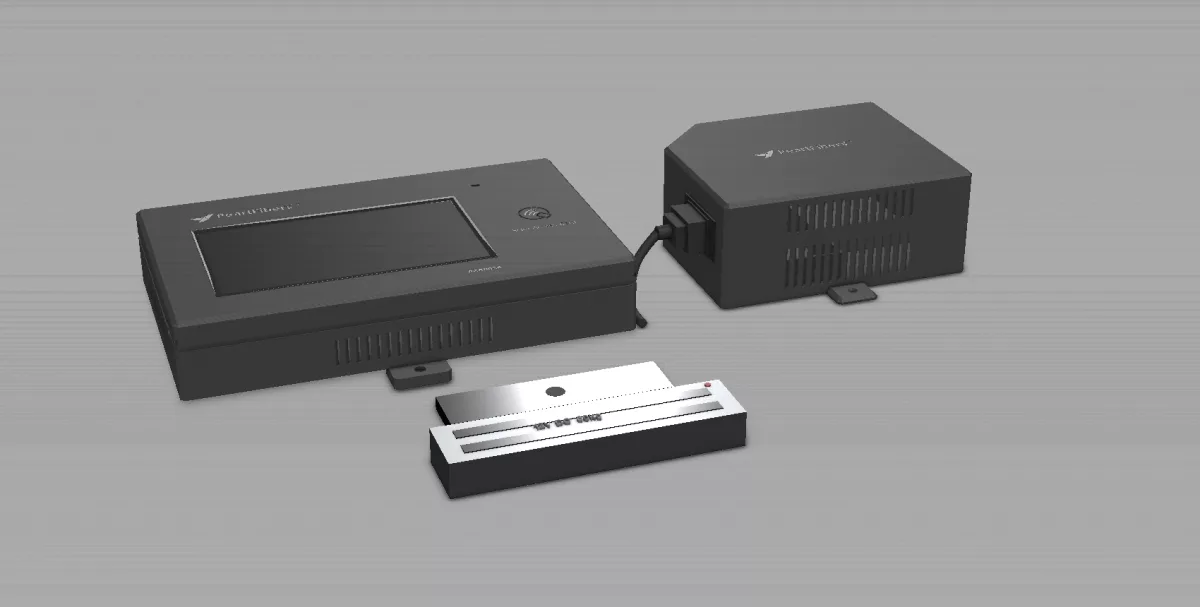
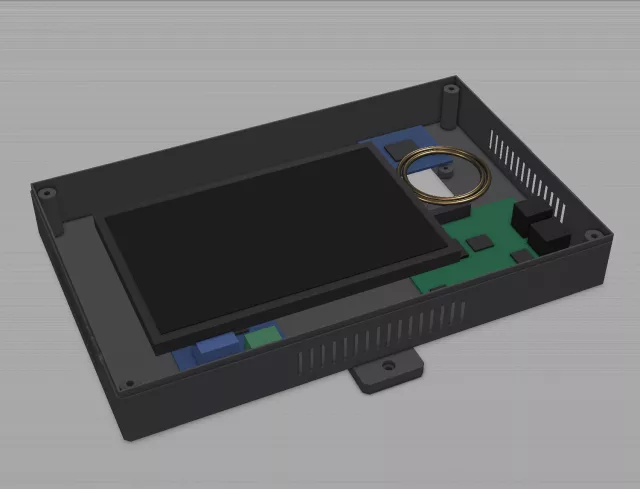
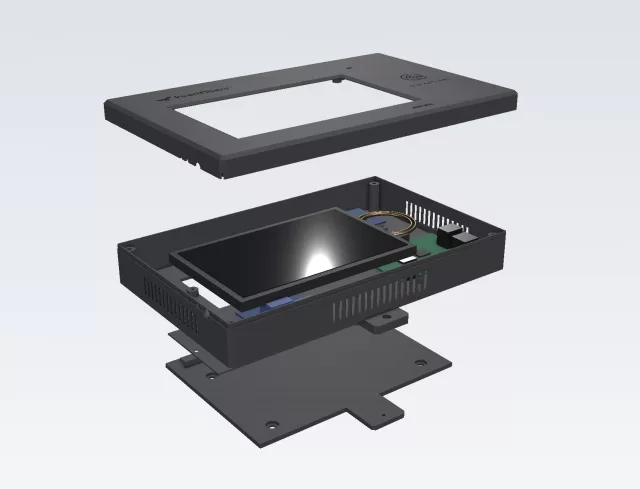
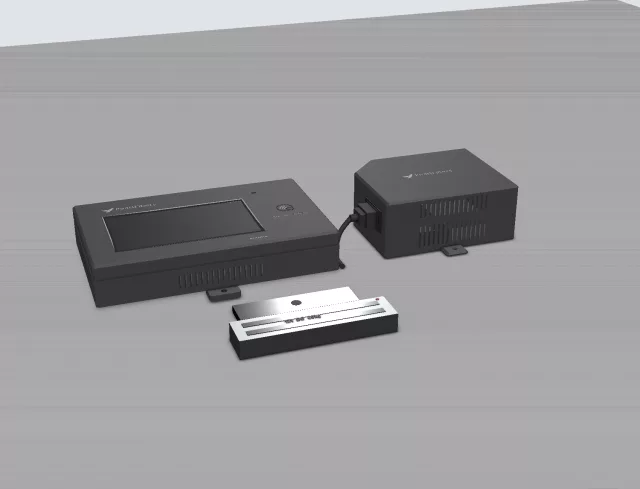
PearlFibers designed and builds the device end to end — the control board, the case, the software and the power. It reads a member's RFID card or a guest's reservation code on the screen, and drives the magnetic lock through a smart, adjustable DC relay. The on-device software integrates with the Business Avenue platform, so the door grants access from live bookings.
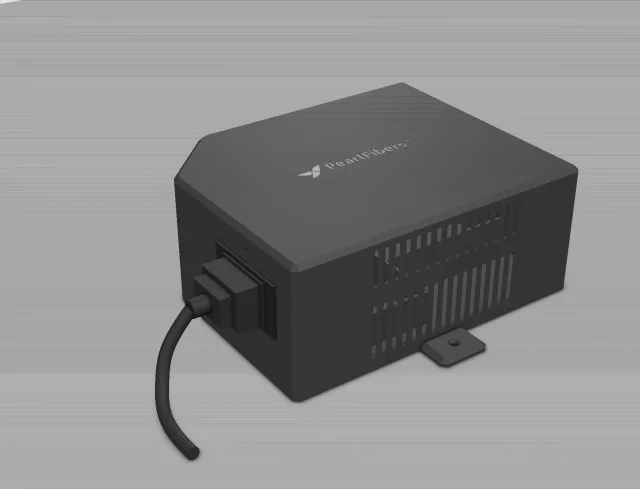
Every open/deny decision is made on the device against a synced local cache, so a network drop never blocks a paid booking. A custom UPS add-on keeps the device and the lock powered through outages.
- ✓ Card and screen: RFID cards for members, on-screen reservation codes for guests
- ✓ A smart, adjustable DC mechanical relay drives the magnetic lock directly
- ✓ A custom control board with 12 GB of RAM, in a case built for the door
- ✓ On-device software integrated with the booking and management system
- ✓ Local open/deny decisions against a synced cache — works through outages
- ✓ A separate custom UPS add-on — 14.8 V / 2200 mAh, dual output: 5 V/5 A for the device and an adjustable output for the lock
- ✓ Full entry log, reconciled to the booking system
- ✓ Fleet-ready: one-time pairing, over-the-air updates, white-label
The outcome
Every meeting-room door at Business Avenue grants access from the reservation calendar — no receptionist with a key, no shared codes, and a full log of every entry. The doors keep working through the branches' power and network cuts.
The device is available as PearlAccess for other deployments, and it is one example of what PearlFibers does: building the software and the hardware a business needs — up to full home and industrial automation.
How it works
From the real system
Public surfaces and admin views, shown with the client's permission — and never with anyone's personal data.
Have a similar problem?
Tell us where it hurts — you'll get a written scope with a price on it, no obligation.